

Late last year, the Primary Care Collaborative—with support from the Ardmore Institute of Health and Healing Works Foundation—commissioned YouGov for a public poll to assess Americans’ experience with whole-person primary care.
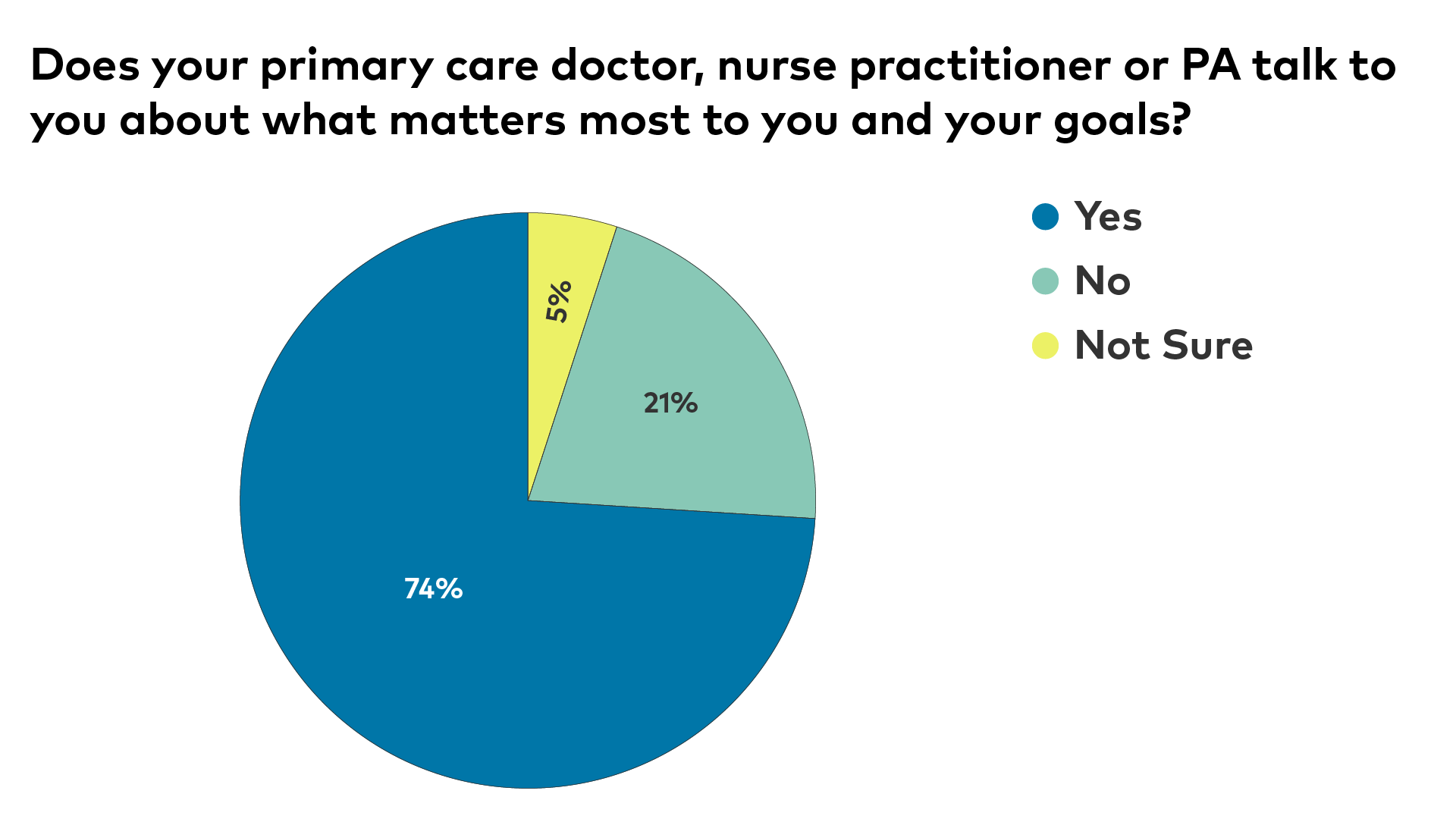
The poll shows there are bright spots in terms of the country’s adoption of whole-person primary care. Nearly three-quarters say their primary care professional asks about what matters most to them and their goals. Primary care is also increasingly recognizing the link between mental health and lifestyle: respondents say the most frequent way primary care helps to manage their mental health is by discussing healthy habits like relaxation techniques, healthy eating, and good sleep practices.
And consumers are saying it’s the kind of care they want. Nearly 80% report that it’s either moderately or very important that primary care professionals partner with them to support their goals around things like exercise, healthy eating and managing stress. And at least some Americans are open to new approaches to care like lifestyle medicine-focused shared medical appointments. (Certain demographics—including people of color, Hispanic, and over age 65—are particularly interested in such offerings.)
Still, there is a significant gap in the U.S. today between the type of care people want and what they receive. Despite the large majority of respondents saying it’s important that primary care partner with them around healthy habits, one third say that their primary care professional does not help them with healthy habits (like physical activity, sleep, and healthy eating) in any way— not even sharing information. Additionally, complementary approaches—things like acupuncture, meditation, and massage therapy—are occasionally used in primary care but are still far from commonplace, regardless of income levels.
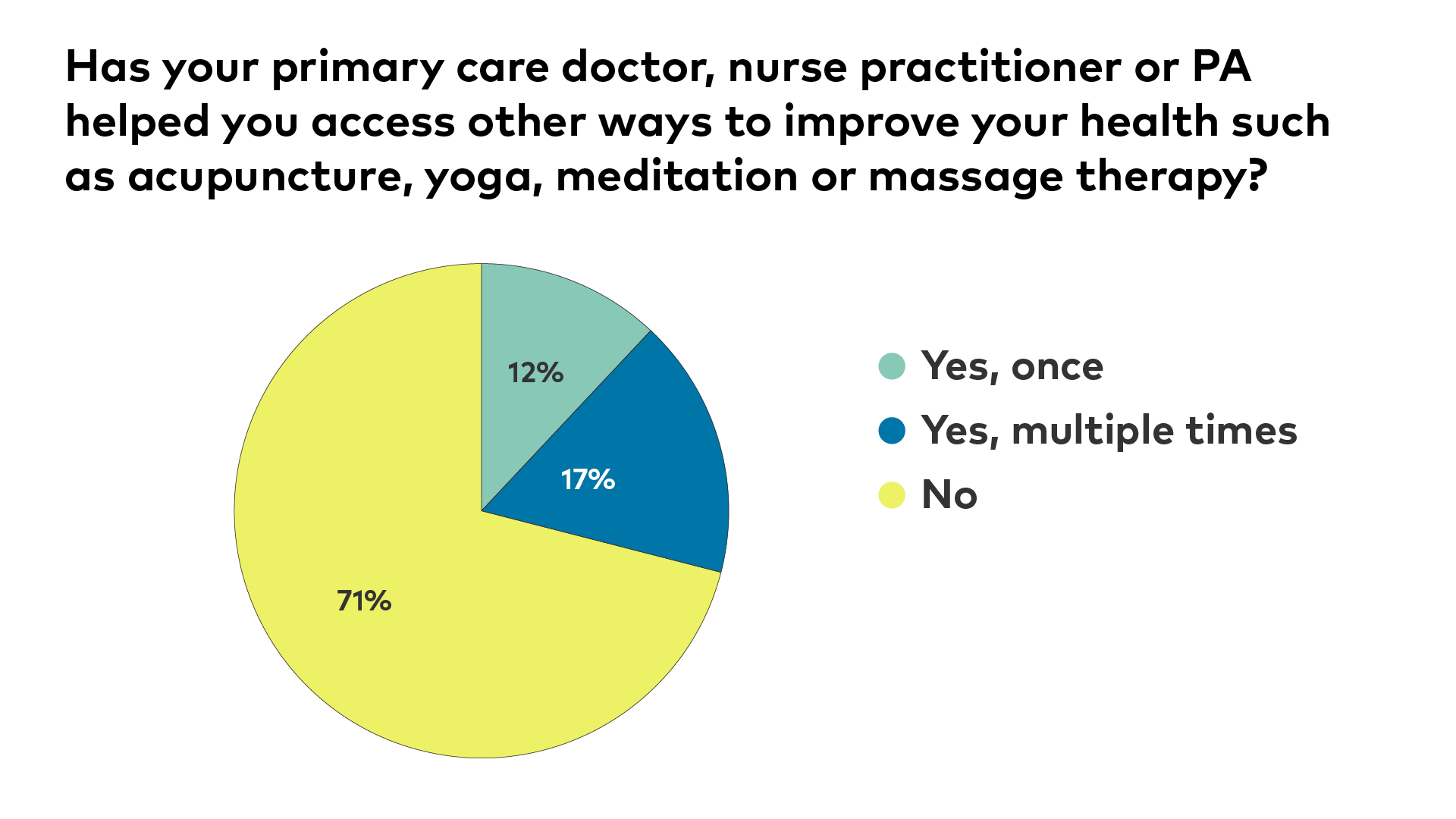
Close to 30% of respondents say their primary care professional has helped them access other ways to improve their health (17% reported “multiple times”), but the vast majority have never been supported to access complementary therapies. And while primary care is increasingly asking about mental health, how teams are managing mental health concerns is varied and likely needs better integration. (For example, less than a fifth say that primary care has helped them connect with a mental health professional.)
Our poll highlights that primary care is orienting in some ways towards whole health, and Americans want to partner around at least one aspect of that: healthy lifestyle changes.
To realize a true transformation of care, though, primary care needs much greater capacity: greater investment to support well-rounded care, more interdisciplinary care team-members, including professionals like health coaches and social workers; more time and flexibility to meet individuals’ needs; and better infrastructure, from analytics to community partnerships. Shifts in policy and practice are essential to actualizing the care described in the updated Shared Principles of Primary Care and achieving better whole health for all communities.
In the coming months, the PCC will be doing additional work to understand how Americans view, access and leverage whole-person primary care.
Watch this space to learn more!